

Democracy & Power
IN THIS SERIES
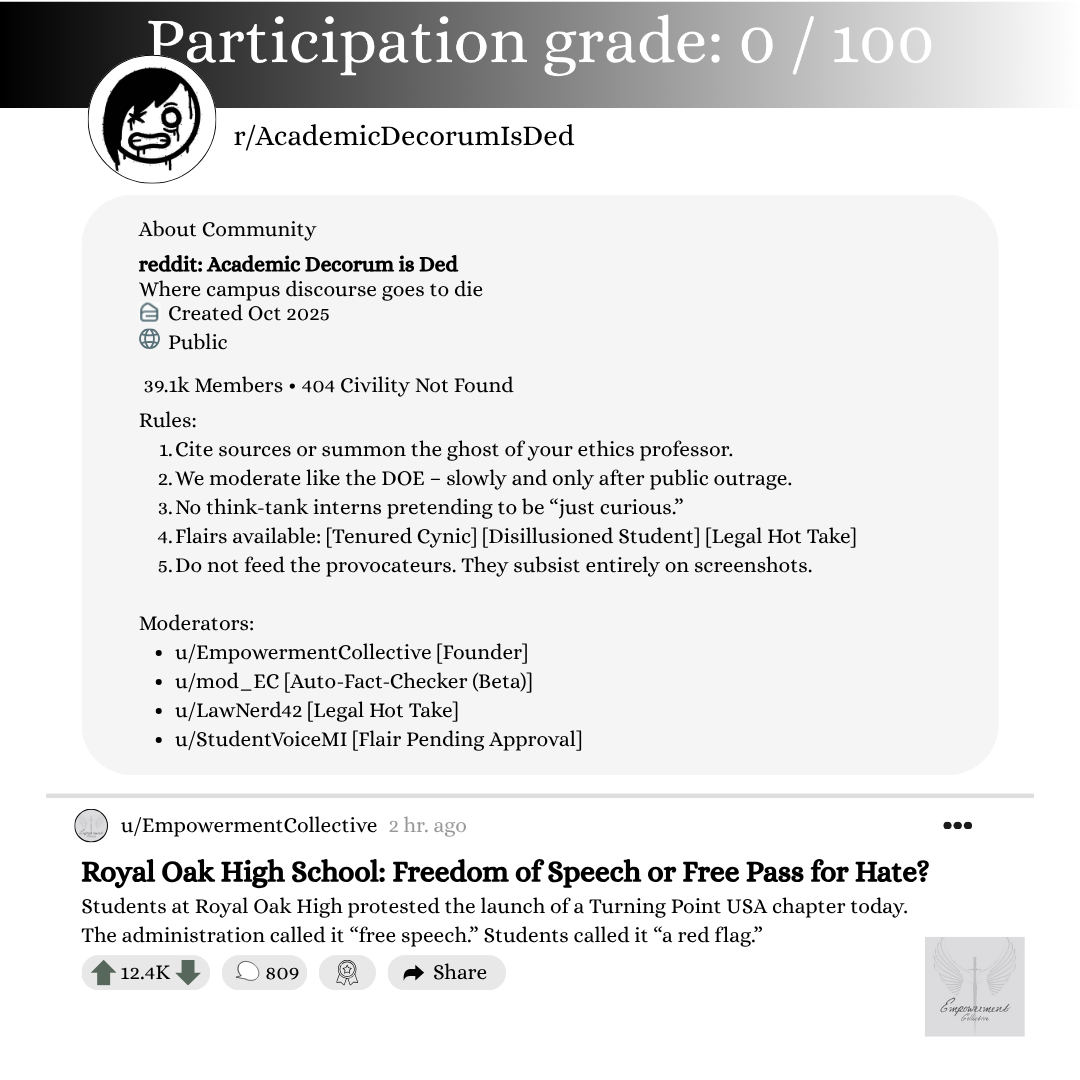
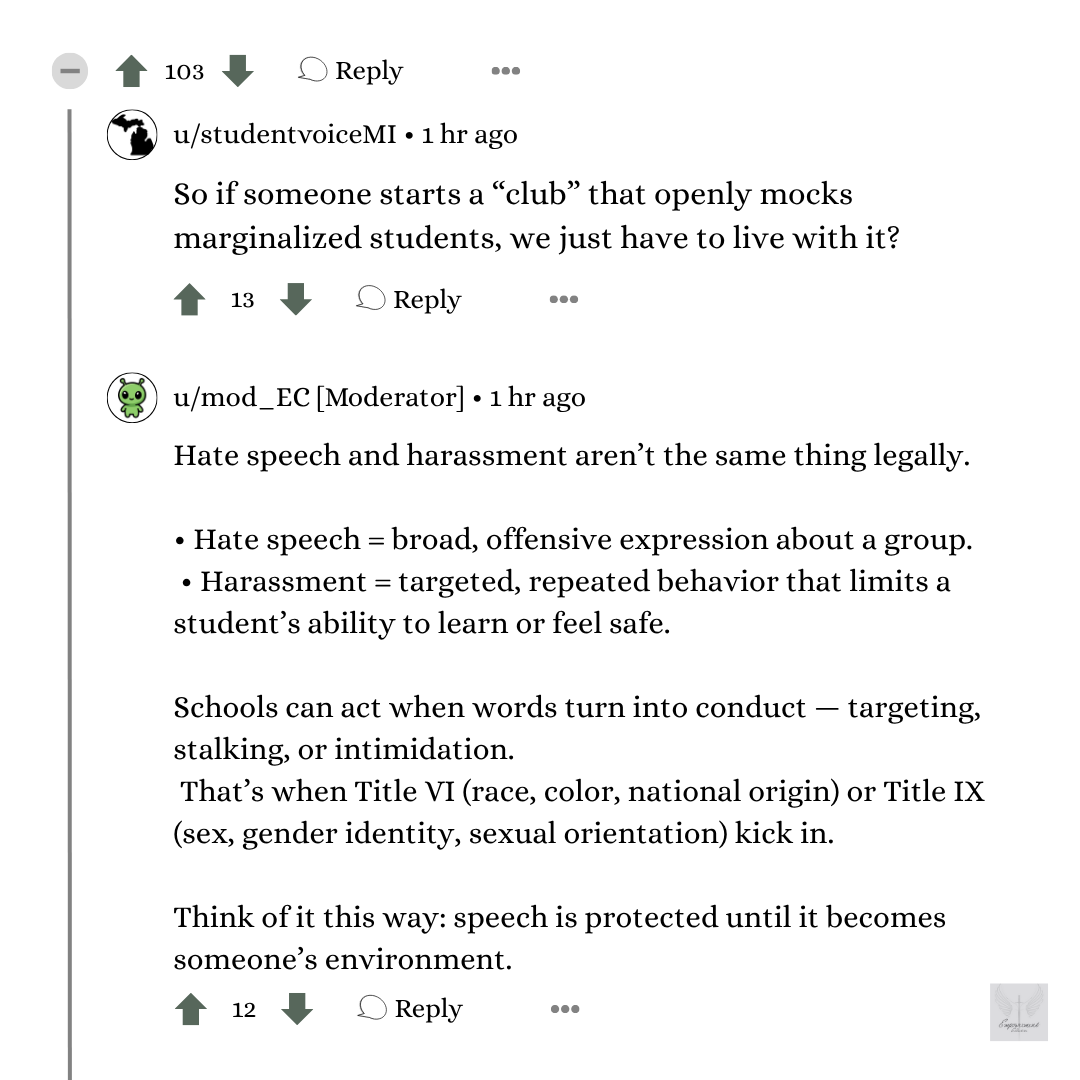
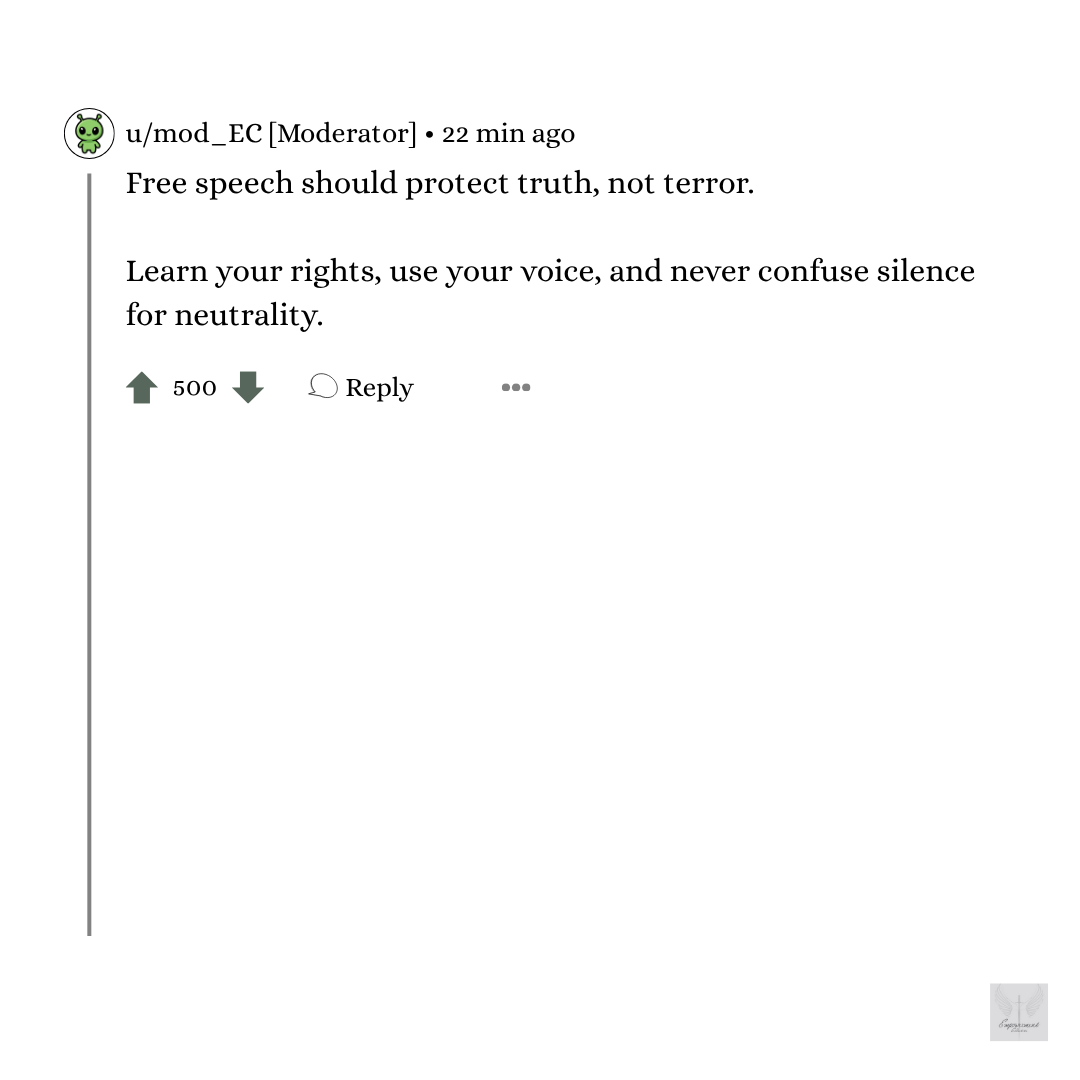
When does free speech protect truth, and when does it excuse harm?
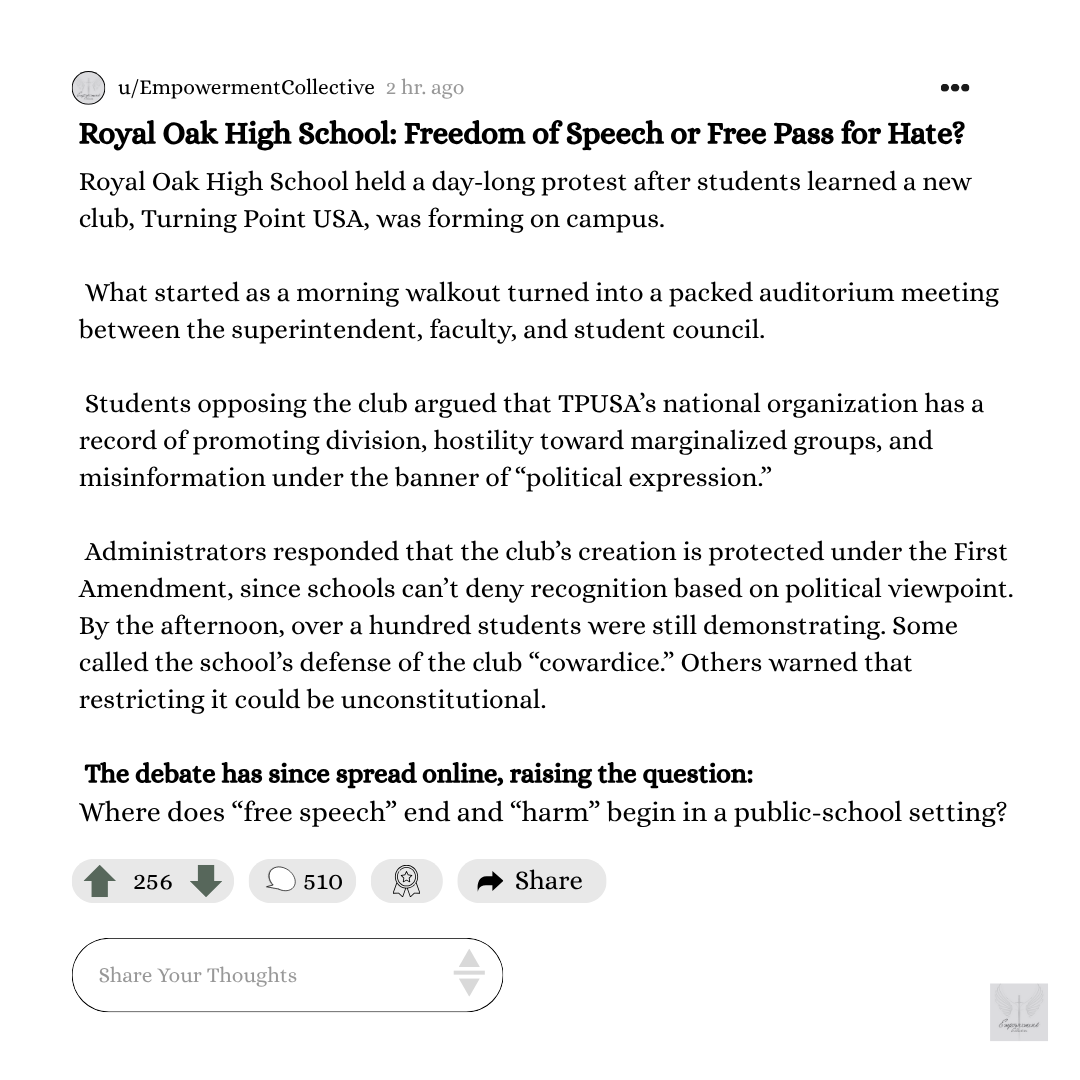
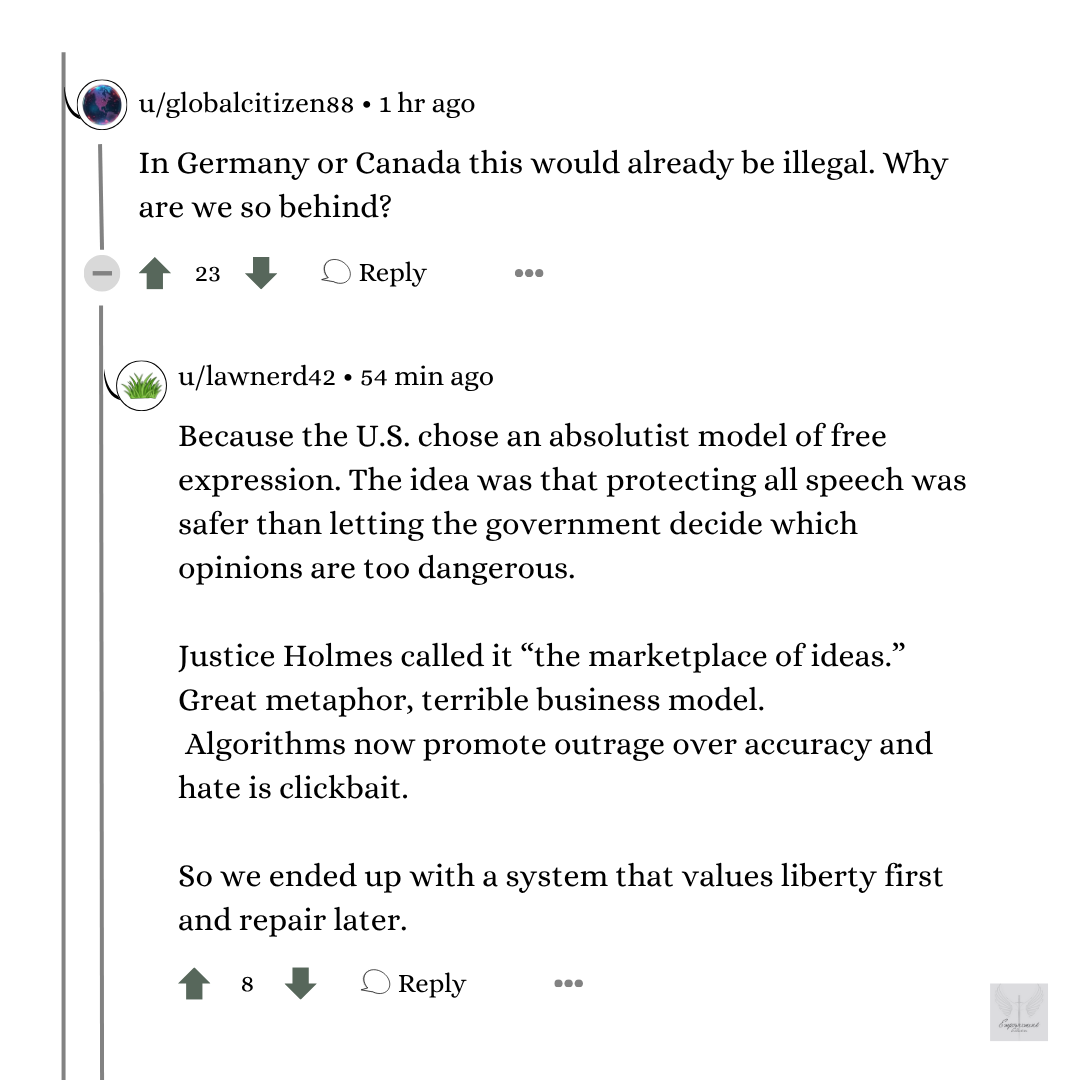
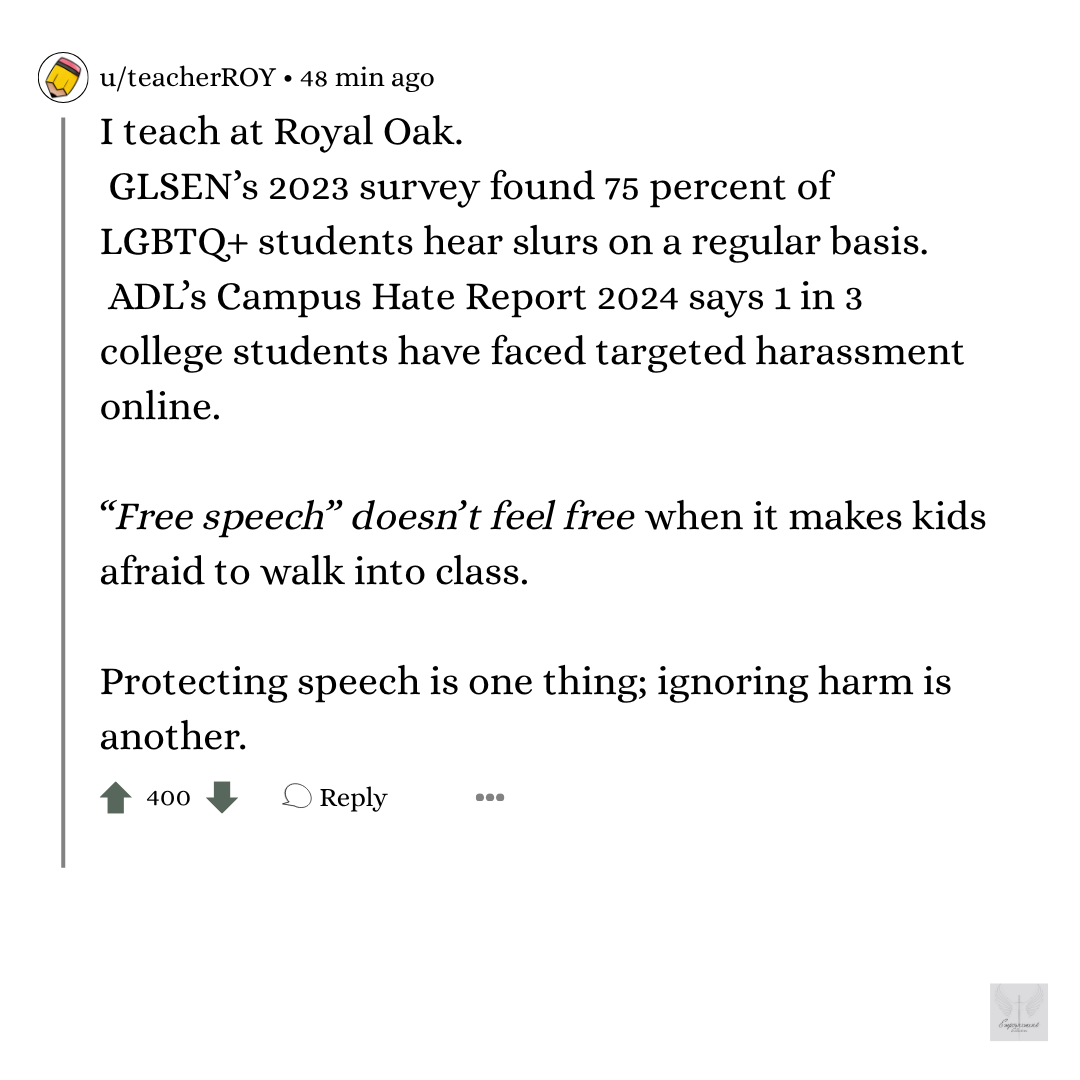
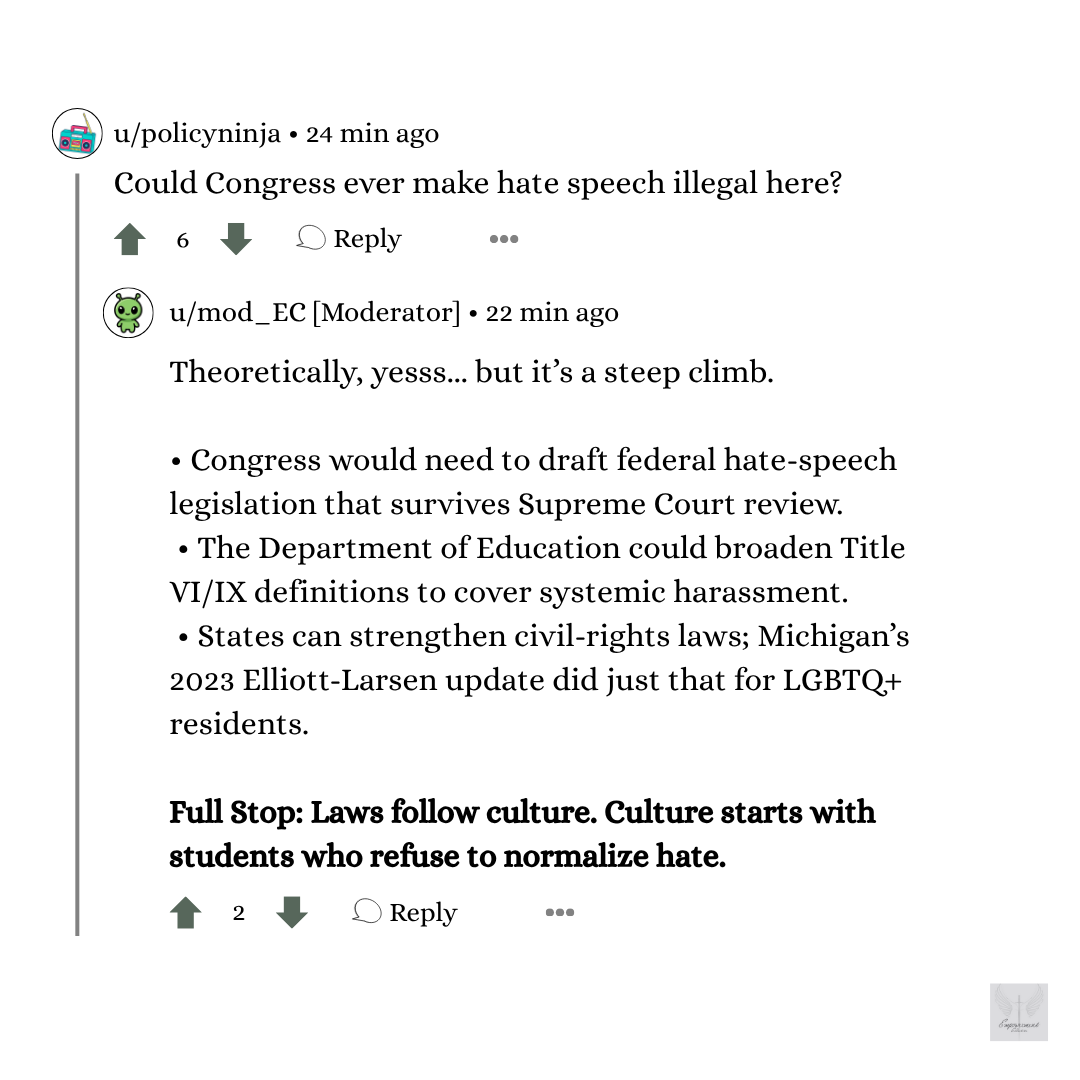
This educational series examines how the First Amendment applies in real-world settings like schools, campuses, and online spaces. Through a case study of the Royal Oak High School protests, it explores the line between protected expression and targeted harassment, unpacking what laws like Title VI and Title IX actually cover — and what they don’t.
Learners will come away with a clearer understanding of:
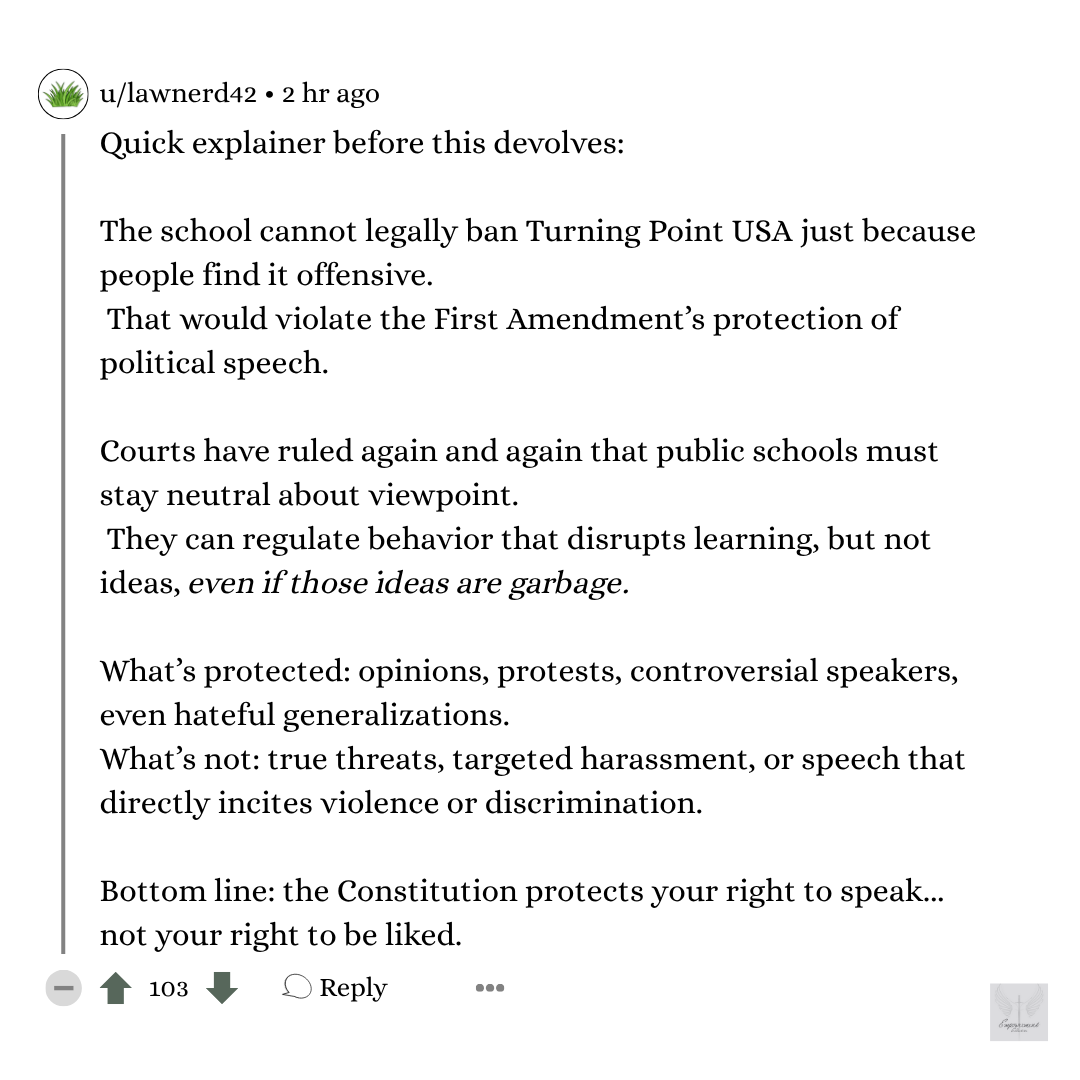
How “free speech” works in public institutions
The difference between hate speech and harassment
The limits of constitutional protection in educational settings
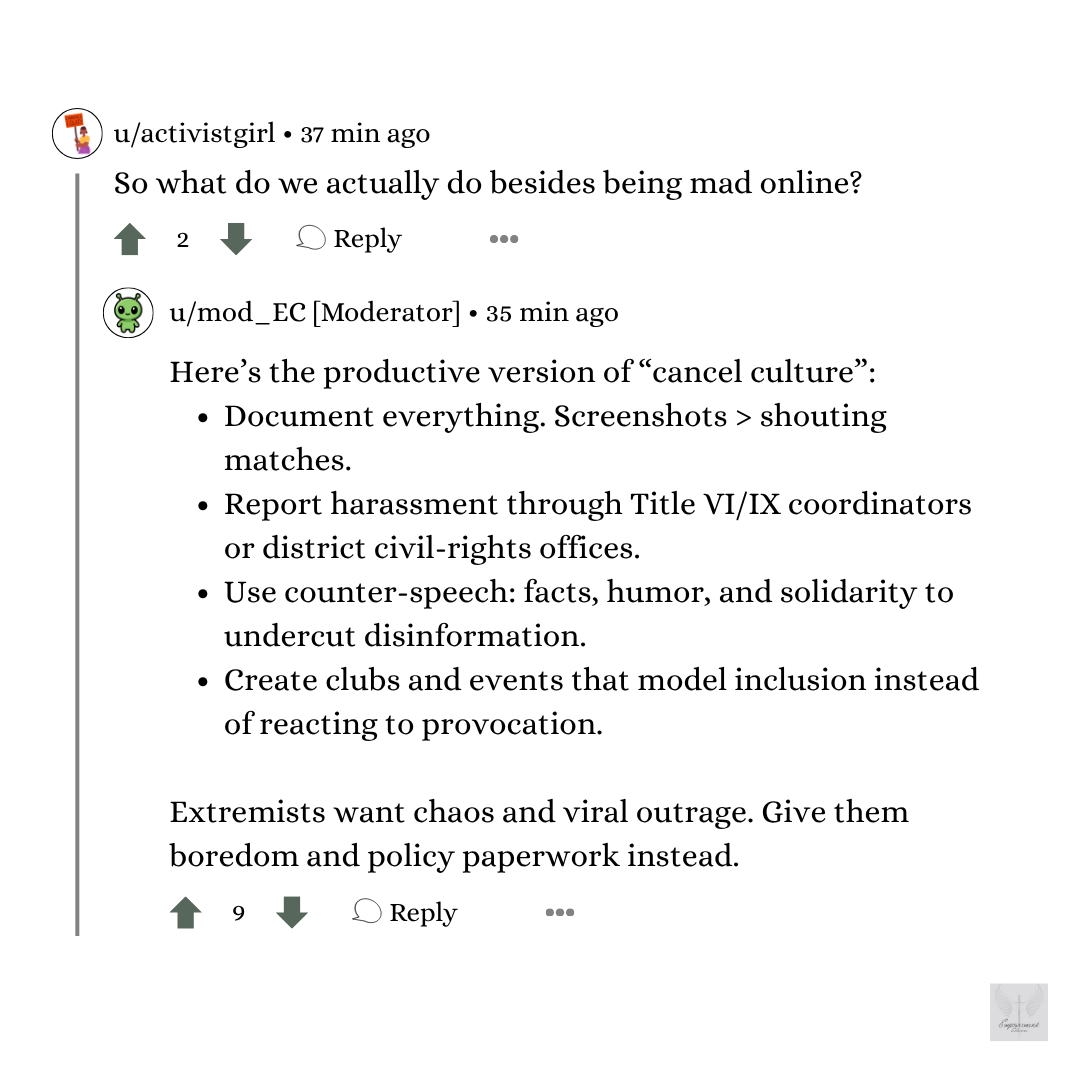
Practical ways to respond to harmful rhetoric through policy, culture, and civic action
This course invites readers to think critically about how democracy protects expression, who benefits from that protection, and what responsibility comes with having a voice.
-
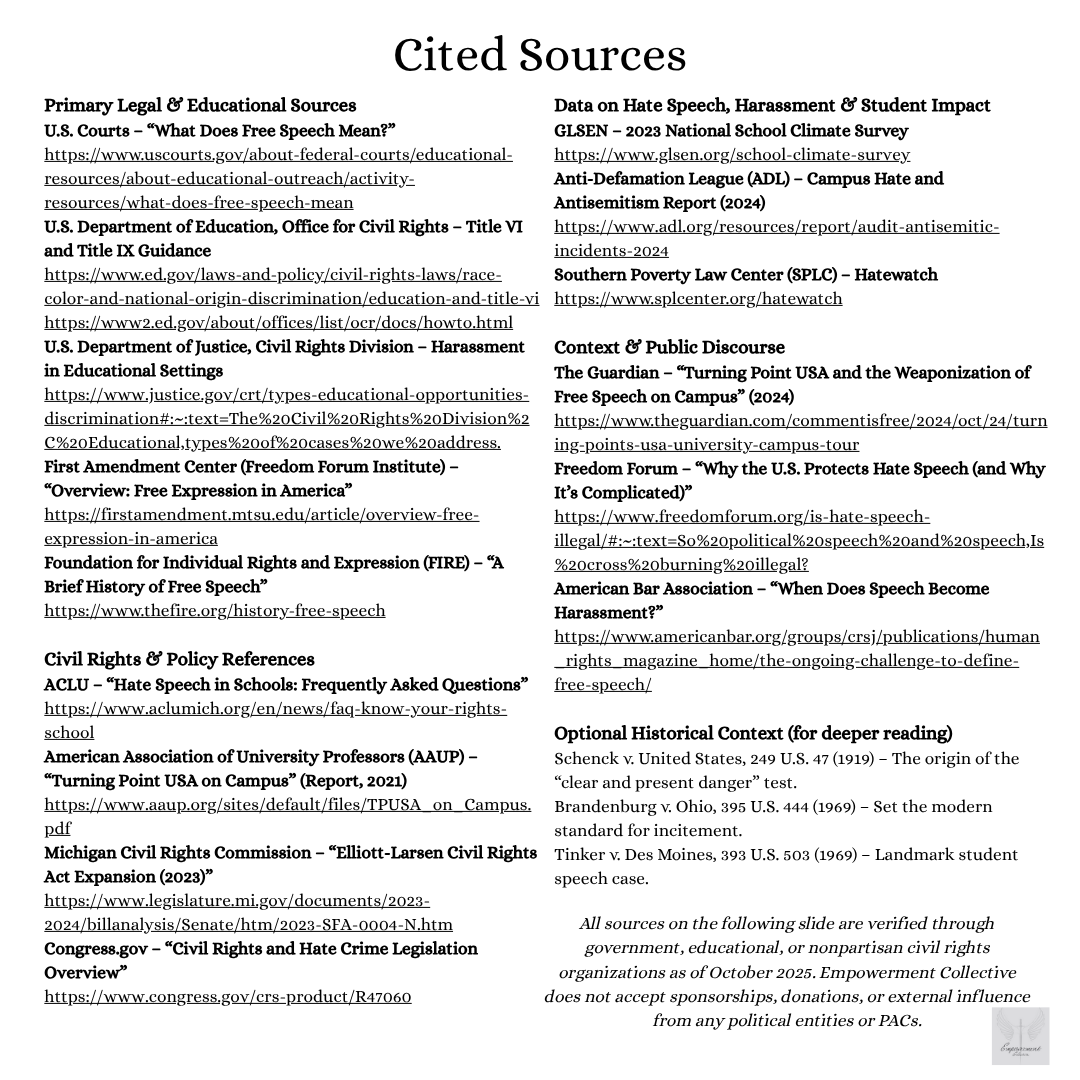
Primary Legal & Educational Sources
U.S. Courts – “What Does Free Speech Mean?”
U.S. Department of Education, Office for Civil Rights – Title VI and Title IX Guidance
https://www2.ed.gov/about/offices/list/ocr/docs/howto.html
U.S. Department of Justice, Civil Rights Division – Harassment in Educational Settings
First Amendment Center (Freedom Forum Institute) – “Overview: Free Expression in America”
https://firstamendment.mtsu.edu/article/overview-free-expression-in-america
Foundation for Individual Rights and Expression (FIRE) – “A Brief History of Free Speech”
https://www.thefire.org/history-free-speech
Civil Rights & Policy References
ACLU – “Hate Speech in Schools: Frequently Asked Questions”
https://www.aclumich.org/en/news/faq-know-your-rights-school
American Association of University Professors (AAUP) – “Turning Point USA on Campus” (Report, 2021)
https://www.aaup.org/sites/default/files/TPUSA_on_Campus.pdf
Michigan Civil Rights Commission – “Elliott-Larsen Civil Rights Act Expansion (2023)”
https://www.legislature.mi.gov/documents/2023-2024/billanalysis/Senate/htm/2023-SFA-0004-N.htm
Congress.gov – “Civil Rights and Hate Crime Legislation Overview”
https://www.congress.gov/crs-product/R47060
Data on Hate Speech, Harassment & Student Impact
GLSEN – 2023 National School Climate Survey
https://www.glsen.org/school-climate-survey
Anti-Defamation League (ADL) – Campus Hate and Antisemitism Report (2024)
https://www.adl.org/resources/report/audit-antisemitic-incidents-2024
Southern Poverty Law Center (SPLC) – Hatewatch
https://www.splcenter.org/hatewatch
Context & Public Discourse
The Guardian – “Turning Point USA and the Weaponization of Free Speech on Campus” (2024)
https://www.theguardian.com/commentisfree/2024/oct/24/turning-points-usa-university-campus-tour
Freedom Forum – “Why the U.S. Protects Hate Speech (and Why It’s Complicated)”
American Bar Association – “When Does Speech Become Harassment?”
Optional Historical Context (for deeper reading)
Schenck v. United States, 249 U.S. 47 (1919) – The origin of the “clear and present danger” test.
Brandenburg v. Ohio, 395 U.S. 444 (1969) – Set the modern standard for incitement.
Tinker v. Des Moines, 393 U.S. 503 (1969) – Landmark student speech case.
All sources on the following slide are verified through government, educational, or nonpartisan civil rights organizations as of October 2025. Empowerment Collective does not accept sponsorships, donations, or external influence from any political entities or PACs.